About
About Brigitta van Bilderbeek
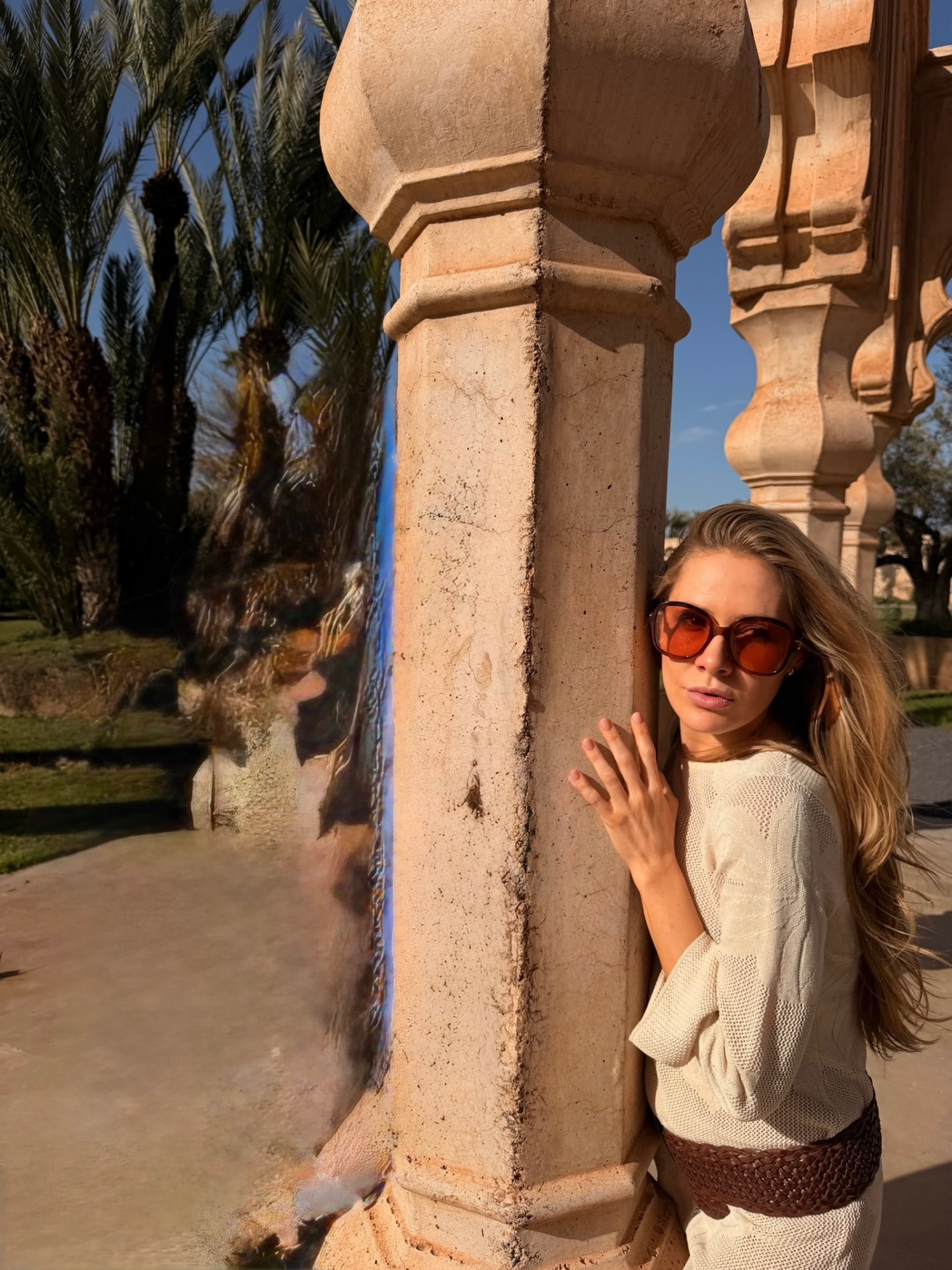
Brigitta van Bilderbeek is a British-Dutch multidisciplinary artist based in Chelsea, London, where she also maintains her studio. Working primarily in painting, her practice explores memory, architecture, identity and perception, with recurring interests in faith, symbolism, beauty and the psychological charge of interior and exterior space.
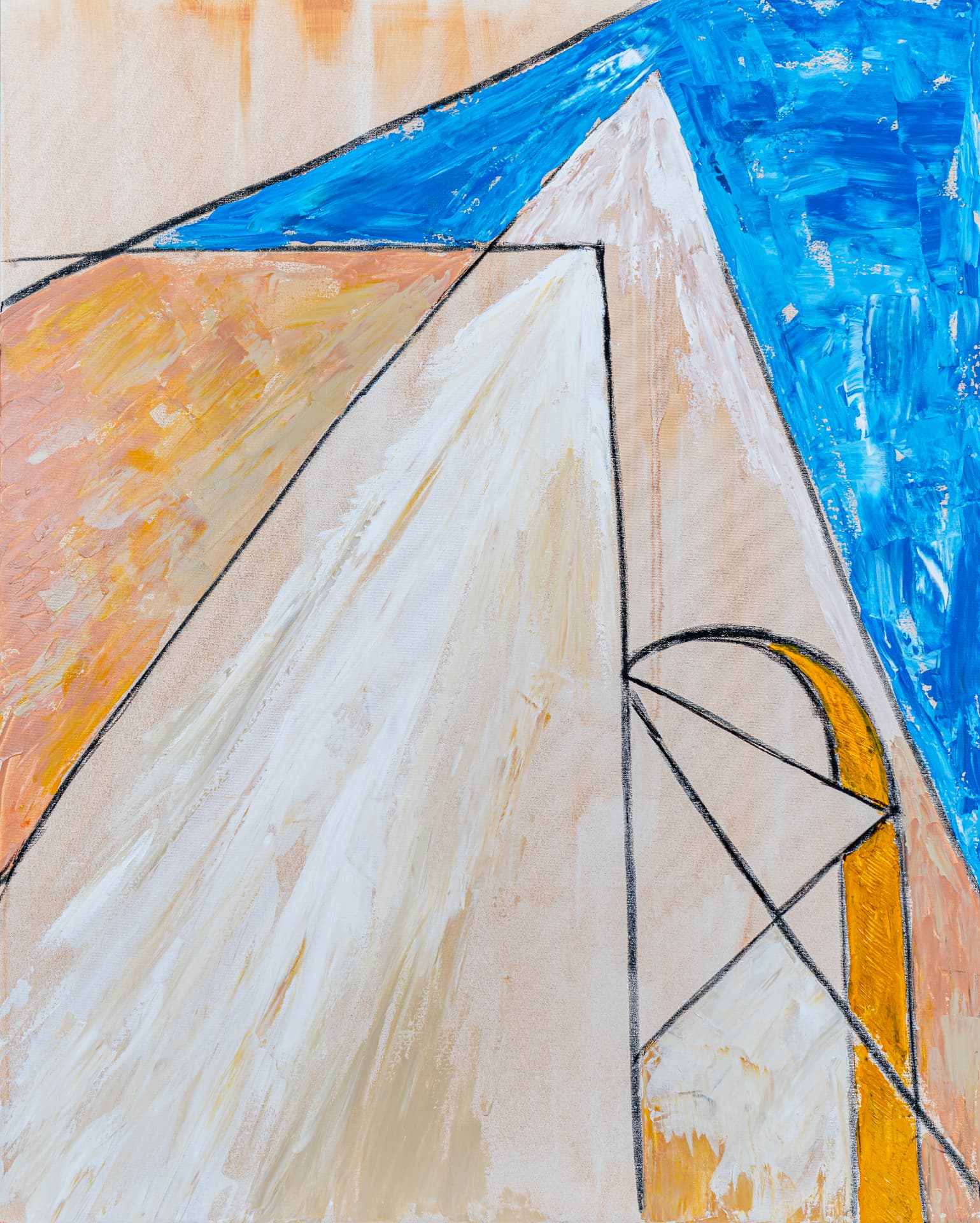
Her recent paintings often begin with places she has inhabited, remembered or moved through: corridors, balconies, streets, doorways and architectural thresholds. Perspective is stretched, compressed and interrupted, allowing physical space to become emotional and psychological. Working in acrylic and charcoal on canvas, van Bilderbeek builds and disrupts images through layering, drawing, erasure and reconstruction, retaining the structure of recognisable places while allowing colour, distortion and shifting viewpoints to destabilise them.
Chelsea holds particular significance within van Bilderbeek’s life and work. Having grown up in the area, she has returned to live and work there as an artist. With its long association with painters, writers, designers, musicians and other creative figures, Chelsea has historically been one of London’s most distinctive artistic neighbourhoods. Her decision to situate her studio there reflects both a personal connection to the area and a desire to participate in, and help preserve, its creative culture.
During her studies, van Bilderbeek spent time studying in Taos, New Mexico, and Paris, experiences that deepened an enduring fascination with architecture, place and the psychology of interior space. The adobe architecture of Taos, its sculptural walls, earthen surfaces, enclosed courtyards and relationship with the surrounding landscape, became an important visual influence, while Paris developed her sensitivity to proportion, architectural detail and the layering of historic interiors.
While studying Fine Art at SMU Meadows School of the Arts in Dallas, she was also immersed in the collection of the Meadows Museum and its extraordinary holdings of Spanish art. Spain itself has remained a recurring presence throughout her life, particularly Andalucía and Marbella, where the meeting of Spanish and Moorish architectural traditions has continually informed her visual language.
Repeated travels to Morocco and Tangier over the past decade further developed this fascination: courtyards, thresholds, tiled surfaces, passages, arches, filtered light and the movement between interior and exterior space.
Together, these places form part of the architectural memory that runs through van Bilderbeek’s paintings, spaces remembered, observed and reconstructed through perspective, colour and atmosphere.
Her wider creative practice extends into music, performance and spatial design. Rather than treating these disciplines as separate, van Bilderbeek sees them as interconnected ways of exploring atmosphere, rhythm, memory and human experience.
She continues to develop a practice that brings together painting, place, memory and the inner life.
Perception of Perspective
I have always been fascinated by the way perspective can create an alternative space. The perspective paintings I have worked on, and continue to develop, use abstraction and architectural perspective to act almost as another room, another space that the viewer can enter.
I like to work at a large scale because it allows these spaces to open up. This becomes particularly interesting when a painting is installed in a small or enclosed room, or somewhere without windows. By using perspective to draw the eye towards distant vanishing points within the canvas, the perceived boundaries of the physical room begin to extend beyond its walls. The painting becomes, in a sense, an opening.
I also respond directly to the architecture surrounding the work. I look at the construction of a room, its angles, lines, proportions and points of perspective, and often mirror or continue them within the painting. In doing so, the architecture of the real space and the imagined architecture of the painting begin to correspond. Rather than simply hanging within a room, the work becomes an extension of it, creating the perception of a space beyond the space we physically occupy.
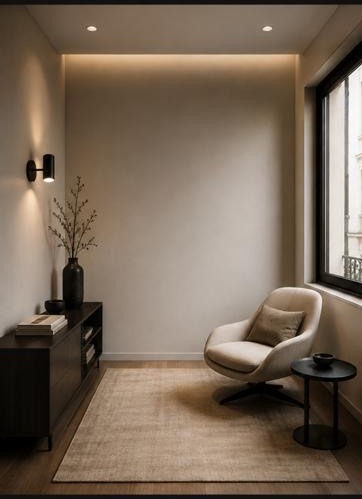
Without painting
The blank wall creates a visual barrier. The room feels smaller and less dynamic.
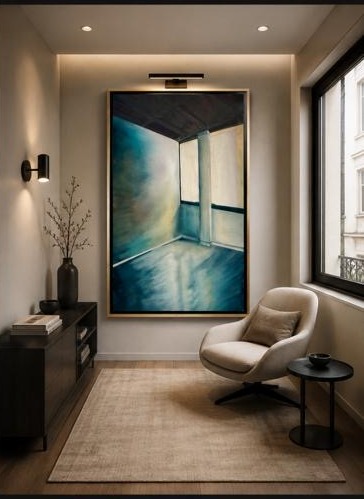
With painting
The painting adds depth and perspective, drawing the eye inward and making the room feel larger and more open.
Architecture
Architecture has always been present in my visual vocabulary. I come from a family with a history in architecture and building, and I grew up with an instinctive fascination for buildings, interiors and the way spaces are constructed.
That inheritance has found its way naturally into my painting. Perspective, thresholds, corridors, windows, doorways and the relationship between interior and exterior repeatedly appear in my work. I am interested not simply in depicting architecture, but in what architecture does: how a constructed space directs the eye, contains memory and changes the way we experience ourselves within it.
My later study of interior decoration at the Inchbald in Chelsea gave another language to an interest that had already been present for much of my life, proportion, perspective, material, light and the emotional character of rooms.
This relationship between painting, architecture and interiors continues to inform the way I work today.
Architecture · Interiors · Perspective · Painting
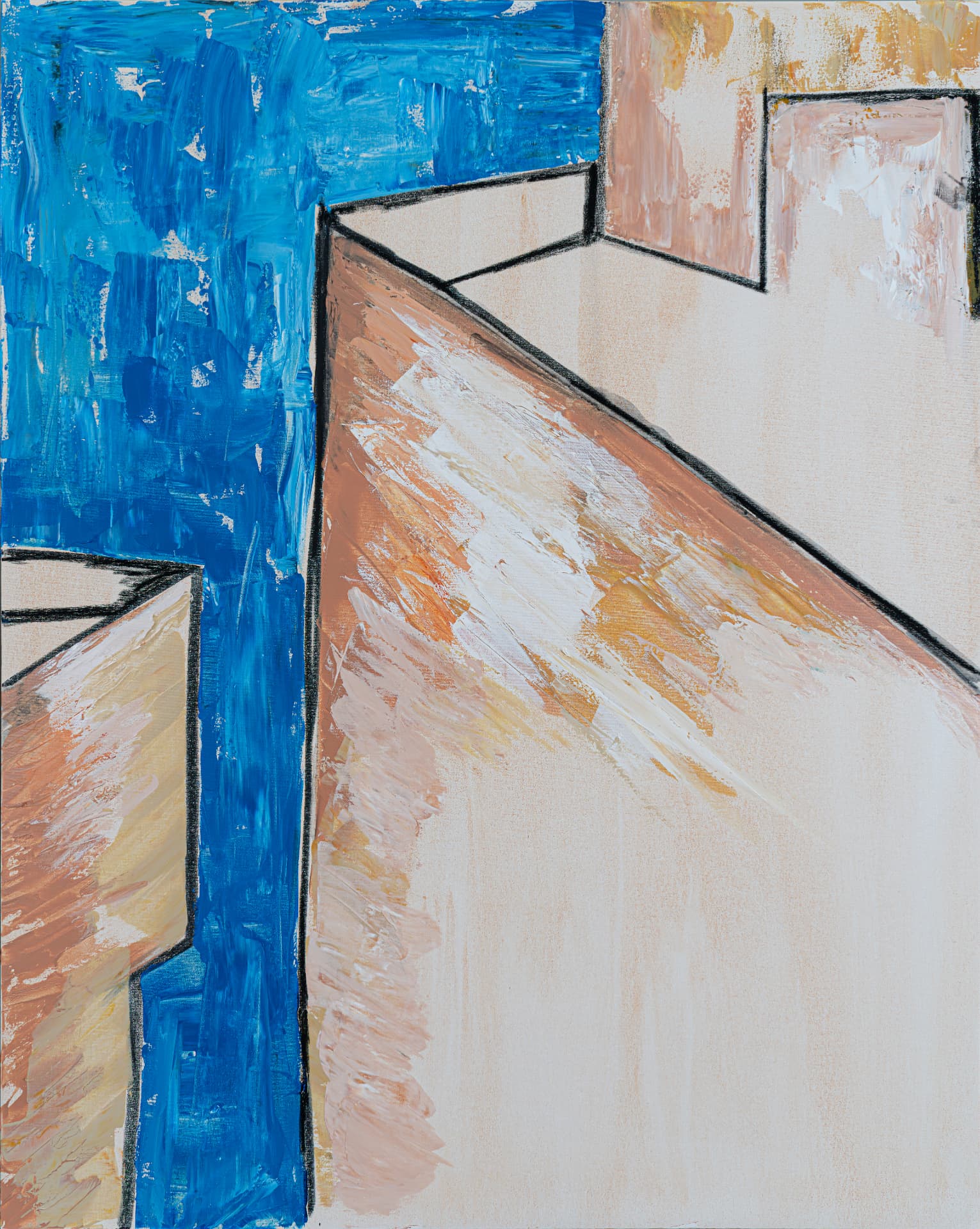
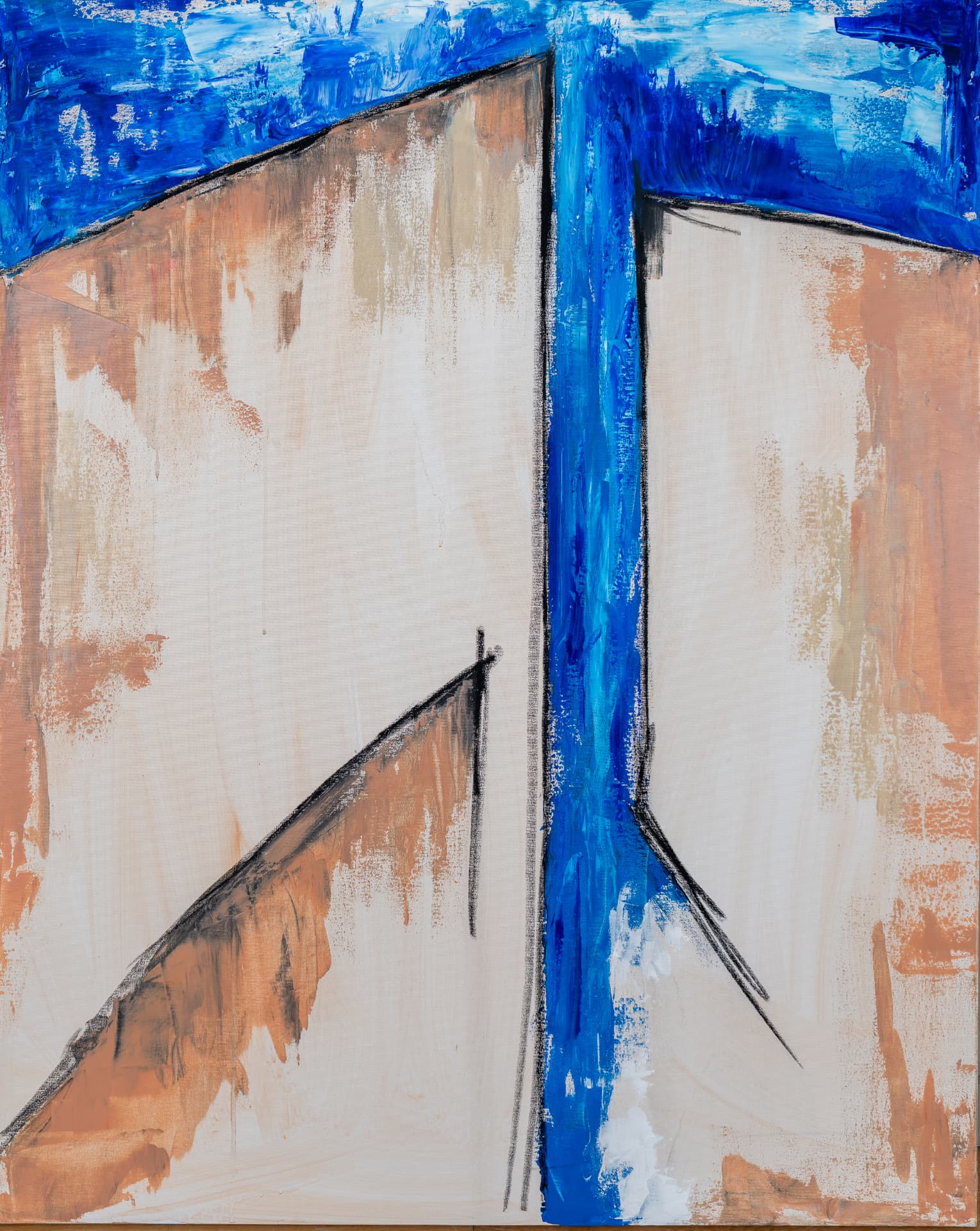
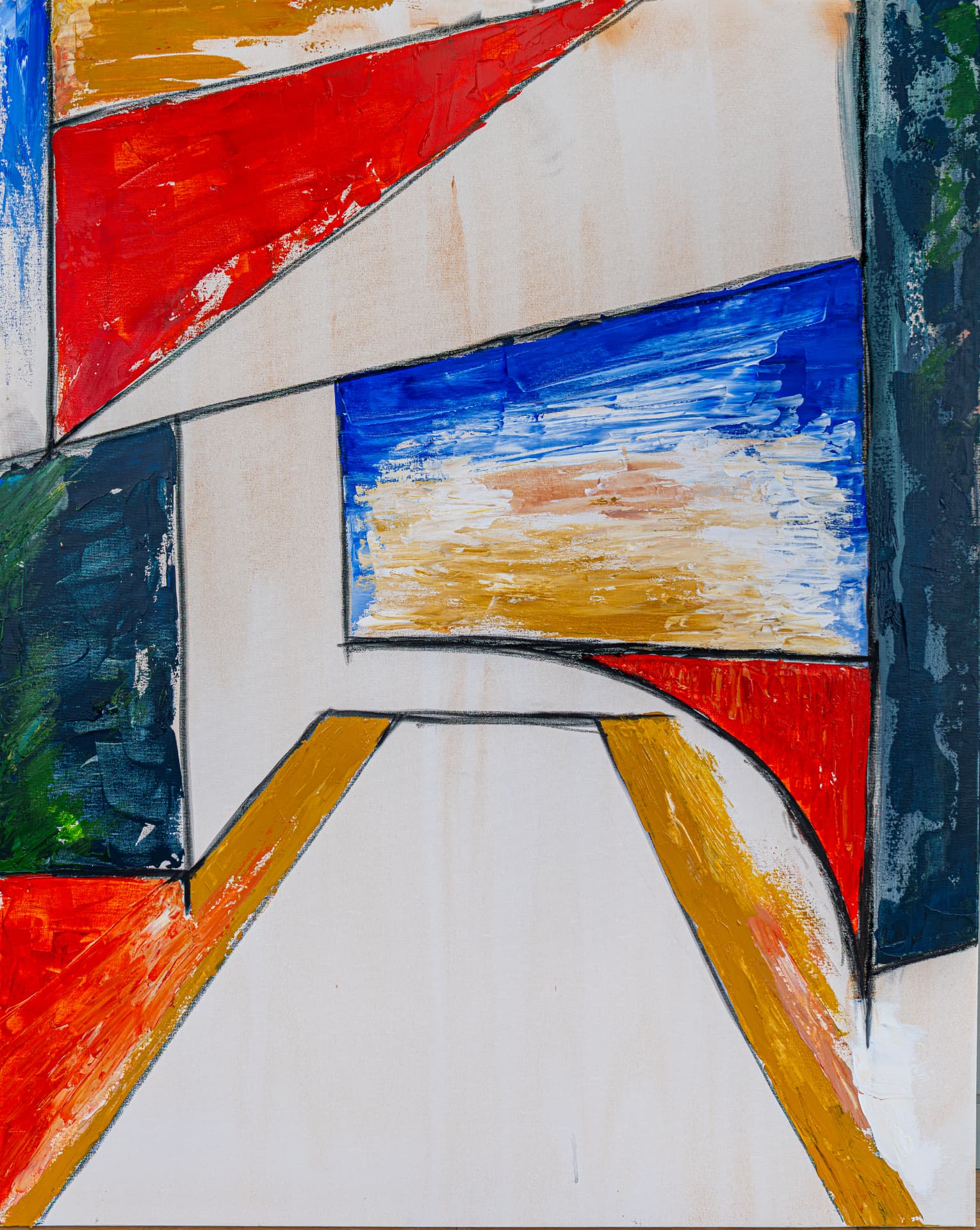
Van Bilderbeek & Architecture
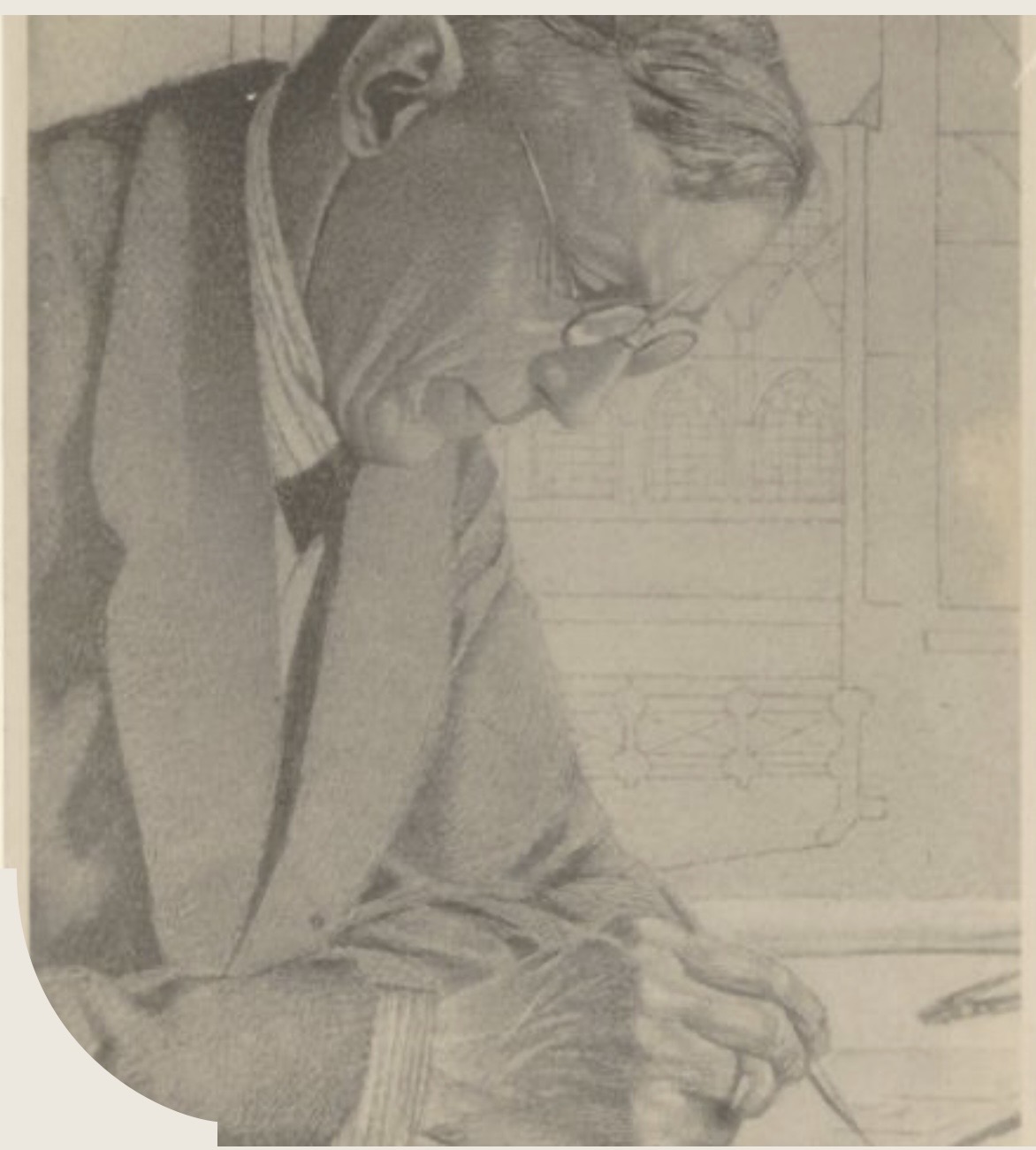
Bernardus van Bilderbeek, An Architectural Tradition
Architect Bernardus van Bilderbeek (1876–1955) was an influential figure in the architectural life of Dordrecht. Trained in Amsterdam at the renowned Van Gendt architectural practice, he went on to design houses, civic and industrial buildings, churches and social housing, while also becoming a passionate restorer and advocate for the preservation of historic architecture.
His approach extended beyond the building itself: he frequently designed interiors, furniture, lighting and architectural details, bringing architecture, craftsmanship and the decorative arts together as a complete vision. Deeply involved in the cultural life of Dordrecht, he was also closely connected with its museums and artistic societies. His work established an enduring van Bilderbeek tradition of architecture, interiors, art and an appreciation of place.
Education
- 2005
- Foundation course, City & Guilds of London Art School
- 2009
- BFA Fine Arts, concentrating in Painting, minor in Art History, Southern Methodist University, Dallas
- 2011
- Interior Decoration, Inchbald School of Design, Chelsea